
How to clean a carpet properly comes down to a few basic steps: remove loose dirt, treat stains before they set, use the right cleaning method for your carpet, and make sure everything dries completely. Regular vacuuming handles everyday debris, but spills, pet messes, odors, and deeply embedded dirt usually need more attention. Rug Pro LLC helps Clearwater homeowners handle the tougher jobs with professional carpet cleaning designed to remove buildup that ordinary household cleaning can leave behind.
Here’s what matters: more cleaning solution and more water do not automatically mean a cleaner carpet. In fact, soaking the carpet or repeatedly scrubbing a stain can create additional problems. A careful approach protects the fibers while getting better results. For routine maintenance, you can handle plenty of carpet care yourself. When the carpet has widespread staining, stubborn odors, heavy traffic marks, or hasn’t been professionally cleaned in a long time, bringing in a professional can save you considerable work.
Key Takeaways
- Vacuum thoroughly before applying water or carpet cleaning products.
- Blot spills instead of aggressively rubbing or scrubbing them.
- Always check whether a cleaning product is appropriate for your carpet.
- Avoid oversaturating carpet because trapped moisture can cause problems.
- Give the carpet enough airflow and time to dry completely.
- Professional cleaning is worth considering for heavy soil, recurring odors, and difficult stains.
Get a Free Carpet Cleaning Estimate
Start by Identifying What Your Carpet Needs
Next time you want to pull out every cleaning product from under the sink, take a look at what you are really dealing with.
Is the carpet simply dusty? Are there several food stains? Is one of the rooms cat pee? Do high-traffic areas look significantly darker than the carpet under furniture?
Knowing the answer is crucial to knowing how much cleaning needs done.
If your carpet is only lightly soiled then simply vacuuming and spot treatment should be all that you need. A whole room dull carpet will likely need deeper cleansing.
The carpet manufacturer care instruction should also be checked if possible. Different carpets have different types of fibers and backing materials, and what works well on one carpet may not work well at all on another.
Step 1: Clear the Area
You’ll want to remove small furniture, toys, shoes, baskets, cords, and anything else resting upon the carpet.
You may not even need to clear out the whole room. Das reicht beim Putzen von freigelegten Flächen bisweilen aus, große Möbelstücke kann man in ihrem Platz lassen. However, removing as much floor space as possible actually helps when vacuuming and deep cleaning.
As you pass through, pause and check the carpet. Searching for stains, heavily soiled high-speed paths, pet spots, gum, wax or other areas where a stain treatment should be performed separately.
Step 2: Vacuum Slowly and Thoroughly
Do not rush this part.
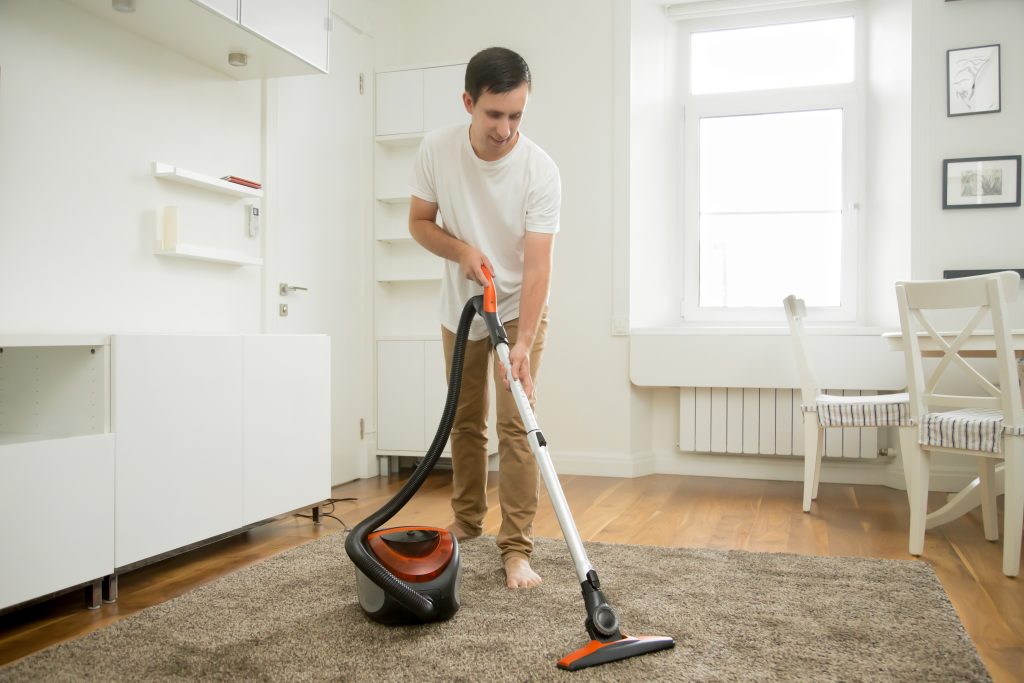
Vacuuming gets rid of any dirt, hair, crumbs like dust or debris in a vacuum before moisture continues. If you skip right to wet cleaning, the process becomes more difficult and less efficient.
Move the vacuum slowly enough to give it time to pick up debris. In busy areas such as hallways, family rooms, and entrances, make another pass from a different direction.
Also pay attention to the edges. A crevice tool can suck dirt and dust stuck by baseboards, furniture, and corners.
Houses where there are pets may require a few more passes to lift the hair from them before they get properly cleaned.
Step 3: Treat Carpet Stains Before Deep Cleaning
Fresh is easier to deal with spills.
Dab as much liquid as possible with a clean dry cloth or paper towel. Place it carefully, not rubbing back and forth. You can also increase the spill by scrubbing and working it deeper into the fibres of the carpet.
If you are looking for a stain remover, select one suitable for your carpet and the type of stain to be dealt with. Do as it says, do not intuit that a stronger solution will perform better.
If you are using an unknown cleaner over a large area make sure to test some in an inconspicuous place first.
Areas where pets have had accidents need particular care as simply cleaning the stains may not remove the smell fully. Check for specific organic stains and odors, a carpet-safe enzymatic cleaner can be functional in accordance with its valuables.
If you have already tried several products and the stain keeps returning, stop adding chemicals. Rug Pro LLC can assess stubborn carpet stains and recommend a professional cleaning approach instead of repeatedly treating the same area.
Step 4: Choose the Right Deep Cleaning Method
In short, learning how to clean a carpet is more than just knowing how to vacuum or spot-clean.
To cover the entire room, homeowners typically use a carpet cleaner and a solution that works on carpets. Thoroughly follow the manufacturer guidelines for your machine and carpet including water temperature, detergent ratio concentrations and number of passes.
Instead of trying to cover the entire room in one go, work on bite-size pieces.
Make sure you are making slow overlapping passes or else you will miss sections. Above all, use the extraction properly on the machine. You want to extract dirty water from the rug, rather than deep-soaking the fibers.
Just like certain carpets can be cared for with low-moisture cleaners. Carpet cleaning methods are ideal based on the carpet type, soil level, and manufacturer recommendations.
Step 5: Avoid Using Too Much Cleaning Solution
One of the biggest DIY no-nos is thinking that if a little detergent is good, more is better.
It doesn’t.
Using too much product can make rinsing and extraction more difficult. Cleaning residue left in the carpet can also leave the fibers feeling unpleasant and may contribute to the carpet becoming dirty again faster.
Measure the cleaning product according to its label or machine instructions.
Do not combine different cleaning chemicals used in our homes. In addition to ruining carpet fibers or dyes, certain mixtures of household cleaners can be dangerous.
As a rule of thumb, do not overcomplicate the process.
Step 6: Do Not Oversaturate the Carpet
The carpet should not be soaking wet when you finish cleaning.
There can also be surplus water that penetrates past the fibers and down into the backing or padding. This in turn makes drying much slower and can lead to moldy odors or moisture damage.
If the carpet cleaning machine you are using allows it, make more extra extraction passes.
Moisture management is especially important in the warm, humid conditions of Clearwater. This is not a carpet to ignore when it gets too damp for too long.
Professional grade equipment, experience with these controlled environments would be a notable area where the professionals make a difference. With professional cleaning, cleaners can choose a bit of the process based upon simultaneous carpet and soil conditions while also controlling the amount of moisture that gets utilized and extracted.
Step 7: Let the Carpet Dry Completely
Around the time we put away the cleaning machine that means your work is not done.
Drying matters.
Aim to increase air circulation throughout the space via fans, A/Cs, or other forms of suitable ventilation. Avoid walking (people and pets) on the carpet when it is wet if you are able.
Do not place furniture directly onto wet carpet. Certain components, including furniture legs and other materials can leave marks, shift colors or dry slowly below them.
How long it takes depends on what type of cleaning method is used, the thickness of the carpet, how humid it is indoors and outside at that time, amount of airflow in the area being cleaned and drying speed based on how much moisture remains after extraction.
Don’t just go by the clock; make sure that carpet is really dry.
How Often Should You Clean Your Carpet?
No one-size-fits all schedule.
Unlike a living room used frequently by children, and pets, a guest bedroom sits quietly unused. Vacuuming high-traffic areas will lead to the need for vacuuming more often while also requiring professionals sooner.
The simple rule of thumb is vacuum often enough that dirt will not have the opportunity to be and be seen. Alternatively, houses with animals, youngsters or plenty of foot traffic tend to want extra frequent consideration.
Respond to spills right away, rather than waiting until your next deep clean.
Then you can take care of that soil with periodic deeper cleanings, which routine vacuuming will not do well.
Common Carpet Cleaning Mistakes to Avoid
Knowing what not to do can prevent you from making a bigger mess.
To start, do not rub stains out aggressively. Start with blotting. This is my go to and generally a safer choice.
Secondly, do not douse a stain with water and think you are going to be able to dry it later. Even though you might not think of it, your carpet padding absolutely holds moisture.
Third, do not test multiple cleaners on a single stain. Some products are simply unpredictable, and some leave major residue.
And if they get out of the habit, then stop treating whatever motivates them from coming back. At times a spot goes away when wet and shows up again as the carpet dries.
Schedule Professional Carpet Cleaning
DIY Carpet Cleaning vs. Professional Carpet Cleaning
DIY cleaning is logical for ongoing basic maintenance, small accidents and pretty good carpets that just need some deodorization.
Professional service proves beneficial when you are dealing with bigger carpeted areas, high footfall rooms, tough spots, pet odors or carpets that look clean but smelly despite house cleaning.
Remember there is also the convenience aspect. Well, now when you involve renting out the equipment, moving the furniture, putting products inside it, cleaning 4 to 6 rooms at a time full of water and then need to extract all that water from it and let dry everything well within hours this fear leads into sort of an all-day project.
Professional cleaning companies already have the right tools, the right supplies, and the proficiency to know how each carpet needs care.
Keep Your Carpet Cleaner Between Deep Cleanings
A few easy habits will lessen the recalcitrance of dirt.
Incorporate entry mats to capture dirt before it ever enters the carpet. In wet weather, ask family members to leave their outdoor shoes outside.
When dirt in high traffic areas is visible, vacuum every time you see it instead of letting it molder.
Well, the answer is to treat spills immediately. It is much easier to clean up a five-minute mess than an old stain several weeks later.
For those of you with pets, it will also prevent the fur and tracked-in dirt from going well into the carpet if vacuumed regularly as well.
Get Professional Carpet Cleaning in Clearwater
Once you understand how to clean a carpet, routine maintenance becomes much easier. Vacuum first, deal with spills quickly, choose carpet-safe products, avoid excessive water and detergent, and give the carpet enough time to dry. Those basic habits can go a long way toward keeping carpet looking clean between deeper treatments.
There are also times when DIY cleaning has done all it reasonably can. If your carpet in Clearwater has stubborn stains, lingering odors, heavily soiled traffic areas, or simply needs a thorough professional cleaning, Rug Pro LLC can handle the deeper work. Contact Rug Pro LLC today to schedule professional carpet cleaning and give your carpets the thorough clean they need.
Book Your Carpet Cleaning Service
Frequently Asked Questions
Q: What is the best way to clean a carpet at home?
A: Start by vacuuming thoroughly, spot-treat stains with an appropriate carpet-safe cleaner, and use a carpet cleaning machine when deeper cleaning is necessary. Avoid oversaturating the carpet and let it dry completely.
Q: Can I clean my carpet without a carpet cleaning machine?
A: Yes. Vacuuming and careful spot cleaning can handle routine dirt and small stains. However, cleaning an entire heavily soiled carpet without proper extraction equipment can be difficult.
Q: Should I vacuum before cleaning my carpet?
A: Yes. Vacuuming first removes loose dirt, dust, hair, and debris so they do not interfere with stain treatment or wet cleaning.
Q: How long does carpet take to dry after cleaning?
A: Drying time varies based on the cleaning method, carpet thickness, airflow, humidity, and the amount of moisture left behind. Use good ventilation and avoid normal foot traffic until the carpet is fully dry.
Q: Is professional carpet cleaning better than DIY cleaning?
A: DIY methods work well for routine upkeep and minor spills. Professional cleaning is generally more practical for heavily soiled carpet, stubborn stains, recurring odors, large areas, or carpets that have not responded well to household cleaning.