
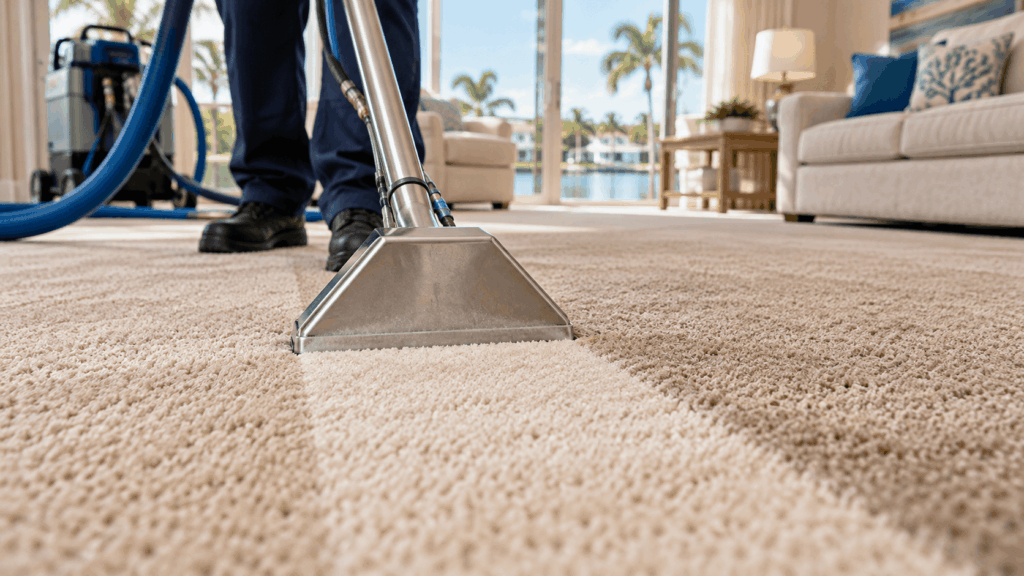
Handling carpet cleaning in Clearwater comes down to choosing between a rental machine and professional services from Rug Pro LLC. Both approaches can remove surface dirt and address minor spills, but results differ when you consider extraction power, cleaning methods, moisture control, and drying times. The right choice depends on your carpet’s condition, foot traffic, stubborn stains, and how deeply dirt has settled into the fibers.
Key Takeaways
- Tackle surface-level grit and fresh spills using lightweight home units before embedded soil takes root.
- Deploy commercial-grade truck-mount units and specialized fiber-soaking chemistry for deep-seated grime.
- Factor in the physical grind of hauling rental rigs and making dozens of slow recovery passes.
- Guard against soggy padding and lingering detergent soap scum that ruin DIY jobs.
- Weigh your carpet’s actual wear, room size, pet accidents, and traffic levels before picking a strategy.
Get a Free Carpet Cleaning Estimate
Pros and Cons of DIY vs Professional Carpet Cleaning in Clearwater
Neither method is automatically better for every carpet. DIY cleaning can be practical for light maintenance and small areas, while professional cleaning is generally more suitable for heavily soiled carpets, stubborn stains, recurring odors, high-traffic rooms, or whole-home deep cleaning.
Professional standards also consider carpet construction, soil conditions, cleaning chemistry, equipment, stain treatment, and post-cleaning inspection rather than relying on a single cleaning approach.
Here is how the two approaches compare:
| Factor | DIY Carpet Cleaning | Professional Carpet Cleaning |
| Upfront cost | Usually lower | Usually higher |
| Equipment | Consumer or rental machine | Commercial cleaning equipment |
| Convenience | Done on your schedule | Requires an appointment |
| Labor | Homeowner does the work | Technician handles the process |
| Deep soil removal | Depends on machine and technique | Designed for deeper cleaning |
| Stain treatment | General-purpose products | Treatment can be matched to stain and fiber |
| Moisture extraction | Varies by equipment | More powerful extraction is typically available |
| Best use | Light maintenance and small jobs | Deep cleaning and difficult carpet problems |
1. DIY Cleaning Works Best for Light Maintenance
Store-bought methods hold their own on lightly soiled synthetic fibers. Homeowners maintain total control of the timeline. Use these machines to refresh guest rooms between major seasonal washes.
- Blot up fresh localized spills before liquids soak through the primary backing.
- Lift dry surface dust from bedrooms that rarely see heavy work boots.
- Wash small enclosed spaces without wrestling massive sectional furniture out the front door.
- Knock out fast maintenance passes on a lazy Sunday afternoon.
- Maintain low-traffic zones where dirt barely penetrates the top pile tips.
Convenience drives this choice. Following the tag instructions carefully keeps you out of trouble. Drowning the fibers in excess water will only cause major problems later.
2. Professional Cleaning Works Better for Deep-Set Problems
Service crews earn their pay when dirt locks into the carpet twist. Field technicians check the fiber type before mixing a single chemical. Commercial blowers then rip that dirty solution straight out of the pad.
- Flush out hardened dirt jammed deep down near the floorboards.
- Scrub dark traffic lanes where Florida sand constantly grinds against the yarn.
- Neutralize acidic pet urine that soaked past the backing into the foam pad.
- Destroy odor-causing bacteria hiding beneath the surface layer.
- Power through massive living rooms before a small rental motor burns out.
- Extract wicking stains that keep bleeding back to the surface after drying.
Skipping the guesswork saves your floors. Trained guys know what works and what ruins a carpet.
3. The Best Choice Depends on Carpet Condition
Smart homeowners blend both tactics. Vacuum hard every week. Hit fresh drops immediately with a clean rag. Keep up with simple maintenance yourself. Then hand the heavy lifting over to the pros when the pile gets truly crushed.
How Do DIY and Professional Carpet Cleaning Methods Differ?
The gap comes down to motor size, chemistry, and pure heat. A grocery store rental spits out soapy water and sucks it back up. Commercial guys run truckmounts or high-end portables that adapt to the soil load. Getting reliable carpet cleaning in Clearwater requires matching the right pressure to the specific fiber.
- Blast heavy soil out of dense pile using massive truckmount water heat and high-CFM airflow.
- Melt sticky oils and bound dirt by laying down targeted alkaline pre-sprays before the main rinse.
- Match specific rinse agents to nylon, polyester, or delicate wool weaves.
- Rip dirty moisture out of the subfloor using high-lift vacuum blowers.
- Prevent thermal shock and chemical burns because the tech actually understands olefin and natural yarns.
- Force air movement across the room to stop humidity from stalling the drying phase.
Hiring a crew means getting an accurate assessment. The hardware alone won’t save a ruined floor.
What Are the Main Risks of DIY Carpet Cleaning?
Doing it yourself rarely destroys a room instantly. Mistakes just pile up over time. Weak suction is the biggest killer. Pumping solution faster than the machine recovers it leaves the pad soaked. Leftover soap scum turns the yarn sticky. This attracts new dirt in days.
- Drench the floorpad by spraying way too much water from a slow-moving wand.
- Leave behind a heavy chemical film by dumping extra detergent into the mix tank.
- Lock organic stains permanently into the dye by using the wrong retail spotter.
- Drive surface dirt deeper into the backing by soaking the same spot six times.
- Fail to pull heavy wastewater out because the rental vacuum lacks sheer pulling force.
- Create ugly, streaky finish patterns by scrubbing too hard in the high-traffic zones.
Gulf Coast weather makes this worse. Clearwater’s heavy, muggy air traps moisture indoors. Wet carpets left for days breed sour smells fast. Proper airflow matters regardless of who pulls the trigger.
When Does DIY Carpet Cleaning Make Sense?
Stick to the rental when dealing with basic upkeep. It pairs well with daily vacuuming. Small issues get fixed before they turn into ugly black spots.
- Confirm the floor only has a light dusting of surface grit on the very top.
- Attack a fresh liquid drop right away with a gentle, fiber-safe spotter.
- Wash a single hallway without paying a high minimum service fee.
- Verify zero pet urine or mildew smells exist down in the padding.
- Check that your manufacturer’s warranty actually allows self-care shampooing.
- Handle the physical strain of dragging a water-logged machine over thick rugs.
Flexibility rules here. Fixing a minor mess the minute it happens keeps the house clean.
Always check the carpet tag first. Different fibers and backing materials react terribly to the wrong chemicals. Testing your soap in a dark corner helps avoid accidental bleaching.
Schedule Professional Carpet Cleaning
When Should Clearwater Homeowners Hire a Professional?
Bring in a crew when you need serious restorative power. Hardened soil, foul smells, and mystery stains require commercial gear. Grinding through a large house with a rental unit will just wreck your back.
- Spot heavy traffic lanes turning gray, matted, and totally crushed.
- Smell old dog urine radiating up from the wooden subfloor.
- Fight stubborn wine or grease spots that laugh at store-bought sprays.
- Notice the fibers stay stiff and dull even after a fresh vacuum pass.
- Feel that crunchy, sticky soap residue left over from a previous DIY attempt.
- Watch old dark spots vanish for a day, then wick right back up to the surface.
- Stare at multiple massive rooms that need deep extraction simultaneously.
- Deal with strange synthetic blends that might melt under heavy amateur heat.
An expert reads the floor before spraying. This stops you from throwing the wrong chemical at a weird stain.
Skipping the DIY route saves serious time. You avoid hauling tanks, mixing hot water, and sweating over the wand all day.
Choose the Right Carpet Cleaning Approach for Your Home
Both paths get the job done if you know their limits. DIY machines excel at quick spot checks and light seasonal passes. Commercial crews bring the heat, the suction, and the chemical knowledge needed for trashed floors.
Base your choice on the actual grit level of your floors. Heavy soil, stubborn stains, and high-traffic wear demand serious equipment.
Rug Pro LLC handles the heavy lifting when your floors reach their breaking point. Our certified technicians tear through tough grime, embedded pet smells, and crushed traffic lanes. Call (656) 600-7767 for a free estimate and secure the most reliable carpet cleaning in Clearwater.
Call Our Clearwater Cleaning Team
Frequently Asked Questions
Q: How often should household carpets receive a deep cleaning?
A: Busy houses with dogs and kids need it frequently. Quiet homes can wait longer. Vacuuming regularly keeps the dry dirt off the top between wet washes. It all depends on your actual foot traffic and outdoor soil levels.
Q: Can professional carpet cleaning remove pet odors?
A: Yes, if the mess sits in the yarn. Repeated urine exposure soaks into the padding and wood subfloor. Surface washing won’t cut it for those deep spots. You need specialized pad extraction to destroy the odor source entirely.
Q: How long does carpet usually take to dry after cleaning?
A: Hot-water truck mounts usually leave floors dry in a few hours. Good airflow, ceiling fans, and cold AC speed up that clock dramatically. Weak rental machines leave things wet for days. Everything depends on the suction power and indoor humidity.
Q: Can old carpet stains always be completely removed?
A: Nobody guarantees total removal of a five-year-old ink spill. Success depends on the fiber, the original spill, and what cheap soaps you already sprayed on it. A tech will tell you straight if permanent discoloration has already happened.
Q: Do homeowners need to move furniture before carpet cleaning?
A: Clearing out toys, lamps, and light chairs makes the job faster. Heavy couches often stay put. Technicians just clean tightly around the base according to their standard service procedures.