
Carpet does not stay the same color forever. Over time, you may notice dull paths, faded spots near windows or odd patches that will not wash out. Carpet discoloration can have many causes, and the right fix depends on what caused it. Rug Pro can assess the affected areas and explain whether professional cleaning may help. Some color changes clean up well. Others are permanent damage to the fiber. This guide explains the difference so you know what to expect.
Key Takeaways
- The first question is whether the color change is soil or damage.
- Hallways and paths between rooms take the most foot traffic.
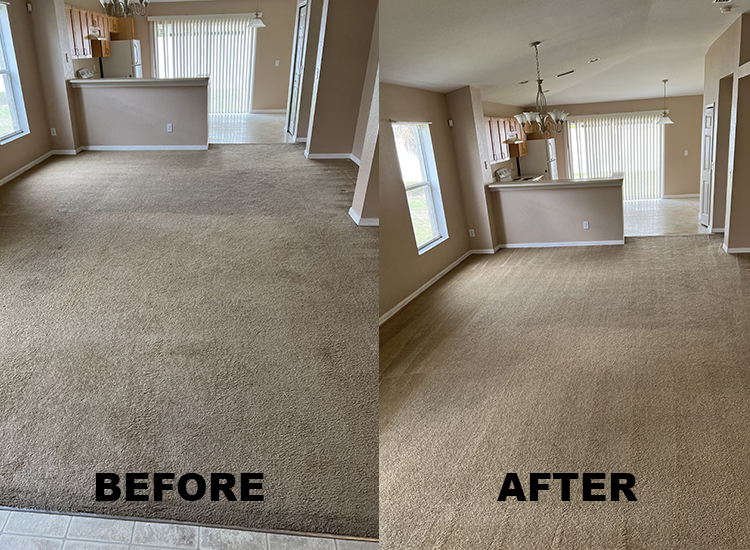
- Professional cleaning can remove soil, many spills and residue that makes carpet look dull.
- Sun fading, bleach spots and some old pet stains are permanent changes.
Get a Free Carpet Cleaning Estimate
Soil vs. True Discoloration
The first question is whether the color change is soil or damage.
- Soil is dirt, oils and residue sitting on or in the fibers. It makes carpet look gray or dingy. Cleaning can often remove it.
- True discoloration means the dye in the fiber has changed or been removed. Cleaning cannot put color back.
A trained technician can often tell the difference by looking closely and testing a small area.
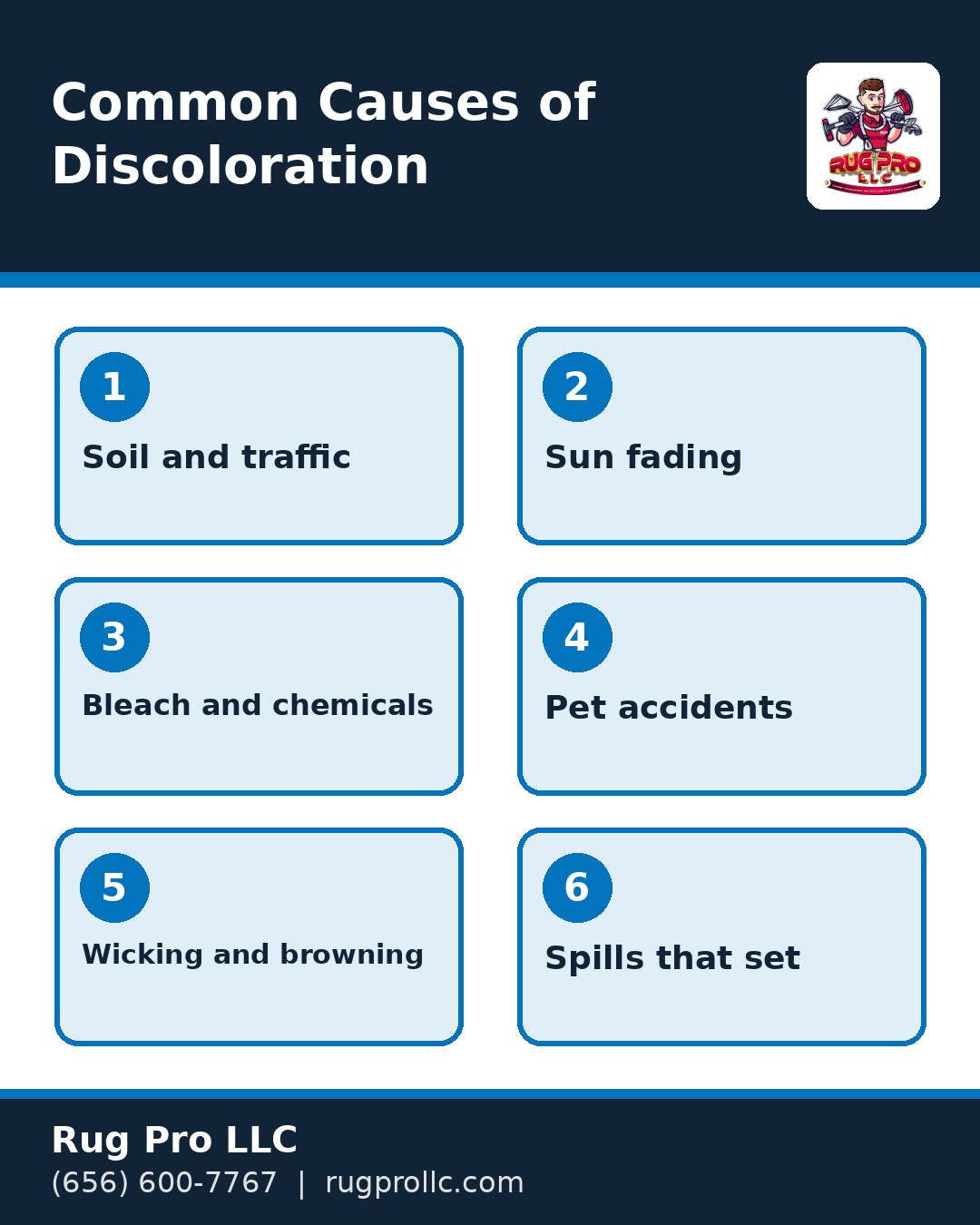
Common Causes of Carpet Discoloration
Traffic lanes
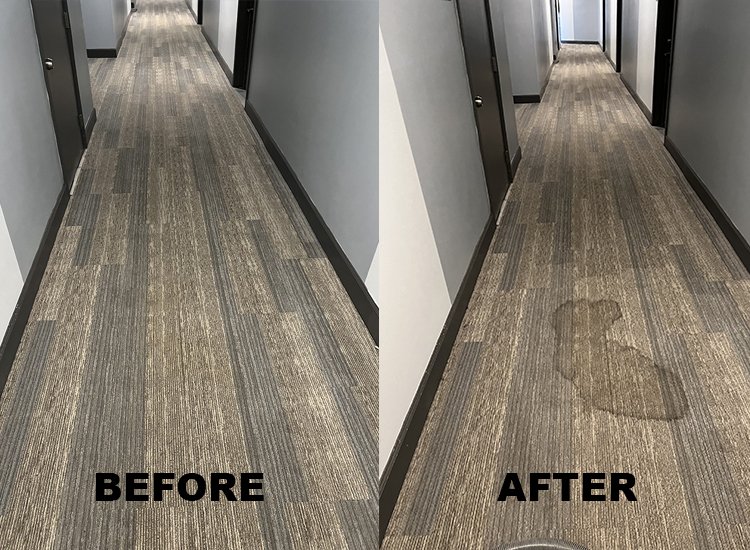
Hallways and paths between rooms take the most foot traffic. Dirt and oils build up there first, creating darker lanes. These lanes are usually soil and often clean up well. In some cases, the fibers are also worn, which can make the area look different even after cleaning.
Sun fading
Sunlight can fade carpet dye over time, especially near windows and glass doors. Fading is a change in the dye, so cleaning will not restore the color. Blinds, curtains and UV-blocking window film can help slow fading.
Bleach and household chemicals
Bleach, some acne creams with benzoyl peroxide, certain cleaners and pool chemicals can remove dye from carpet. These spots often look light yellow, orange or white. They do not clean out because the color is gone. Some may be improved by spot dyeing or patching.
Ask About Carpet Discoloration
Pet accidents
Pet urine can stain carpet and, over time, change the color of the fibers. Fresh accidents respond best to treatment. Older stains may leave permanent marks even after the odor is treated.
Spills that set
Coffee, red wine, juice and sports drinks contain dyes and acids. If left too long, they can bond to the fibers. Many can be improved with professional spot treatment, but some leave a shadow.
Wicking and browning
Sometimes a stain looks gone after cleaning, then reappears as the carpet dries. This is called wicking. It happens when residue deep in the carpet backing or pad rises to the surface as moisture evaporates. Browning can also occur when some natural fibers stay wet too long.
| Cause | Can cleaning help? |
|---|---|
| Soil and traffic lanes | Often yes |
| Sun fading | No, the dye is changed |
| Bleach spots | No, but repair may help |
| Pet urine | Sometimes, if treated early |
| Set-in spills | Often improved |
| Wicking | Often yes, with proper drying |
What Professional Cleaning Can Do
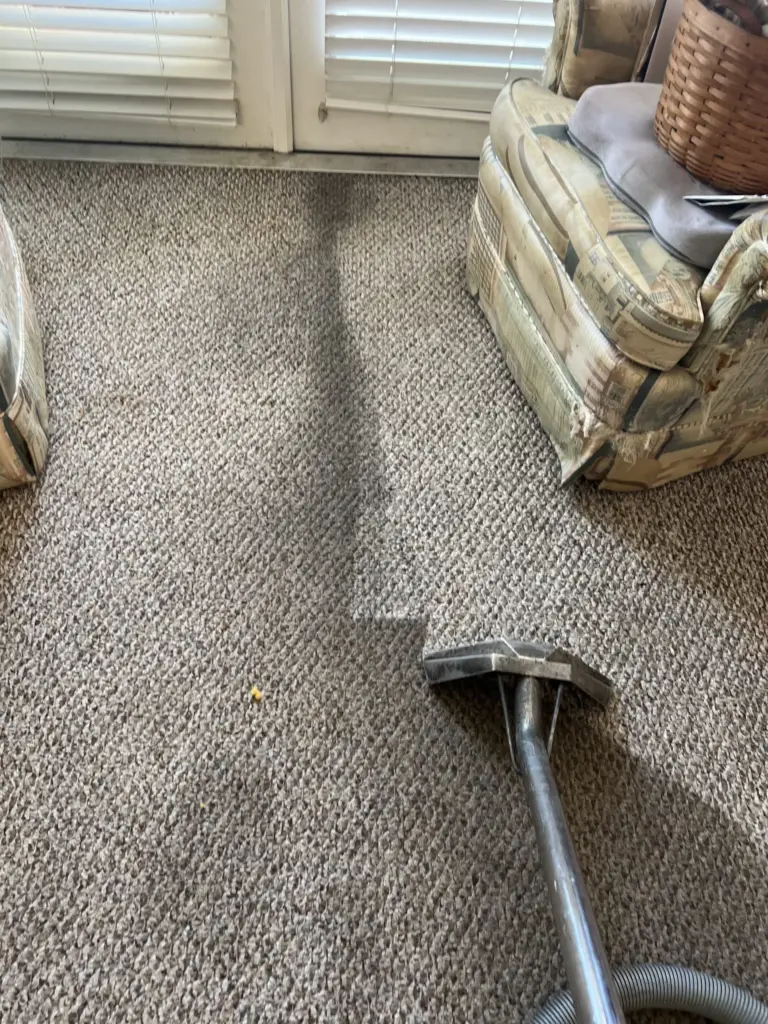
Professional cleaning can remove soil, many spills and residue that makes carpet look dull. Technicians can choose spot treatments based on the type of stain. They can also use methods that limit moisture and speed drying to reduce wicking. Rug Pro offers professional carpet cleaning for homes across Pinellas County.
What Cleaning Cannot Do
Cleaning cannot add dye back to fibers. Sun fading, bleach spots and some old pet stains are permanent changes. For these, options may include:
- Spot dyeing by a color repair specialist
- Patching with a matching piece of carpet
- Placing a rug or furniture over the area
- Replacing the carpet in that room
How to Prevent Discoloration
- Vacuum often, especially in traffic lanes.
- Blot spills right away with a clean white cloth.
- Keep bleach, acne creams and pool chemicals away from carpet.
- Use window coverings to limit direct sun.
- Treat pet accidents quickly.
- Schedule regular professional cleaning.
Why Early Action Matters
The sooner you deal with a spot or a dull area, the more likely it is that cleaning can help, since fresh spills and new soil sit closer to the surface of the fibers and have not had time to bond with the dye or spread deep into the backing and pad. Waiting weeks or months gives stains time to set, which can turn a simple cleaning job into a permanent mark that no method can fully remove.
Testing Before Treating
A careful technician will test cleaning products in a hidden spot before treating a stain, since some carpets and dyes react differently to certain products. This step helps protect your carpet from new damage while working to improve the look of the area.
Discoloration From Furniture and Rugs
Sometimes you will notice that the carpet under a sofa, bed or area rug looks brighter than the carpet around it, which happens because the covered carpet was protected from sunlight and foot traffic while the exposed areas slowly faded or collected soil over the years. Cleaning can help even out soil differences, but fading from sunlight will remain, so moving furniture and rugs now and then can help carpet age more evenly.
Pet Stains and Color
Pet urine starts out acidic and can change as it dries. Over time, it can leave yellow or brown marks. Treat accidents fast. Blot, rinse with water and blot again. Call a pro for old or large spots.
Get an Honest Look at Your Carpet
Carpet discoloration can come from soil, sun, chemicals or moisture. Knowing the cause helps you choose the right next step. Learn more about our carpet cleaning in Clearwater. Need help with your floors? Call Rug Pro at (656) 600-7767 or request service online.
Schedule Professional Carpet Cleaning
Frequently Asked Questions
Q: Can faded carpet be fixed by cleaning?
A: No. Fading is a change in the dye. Spot dyeing or replacement may help.
Q: Why are there light spots on my carpet?
A: Bleach, acne creams and some cleaners can remove carpet dye.
Q: Why did a stain come back after cleaning?
A: This is often wicking, when residue rises from deep in the carpet as it dries.
Q: Do traffic lanes clean up?
A: Often yes, since they are usually soil. Worn fibers may still look different.
Q: How can I prevent discoloration?
A: Vacuum often, blot spills fast and limit direct sun.