
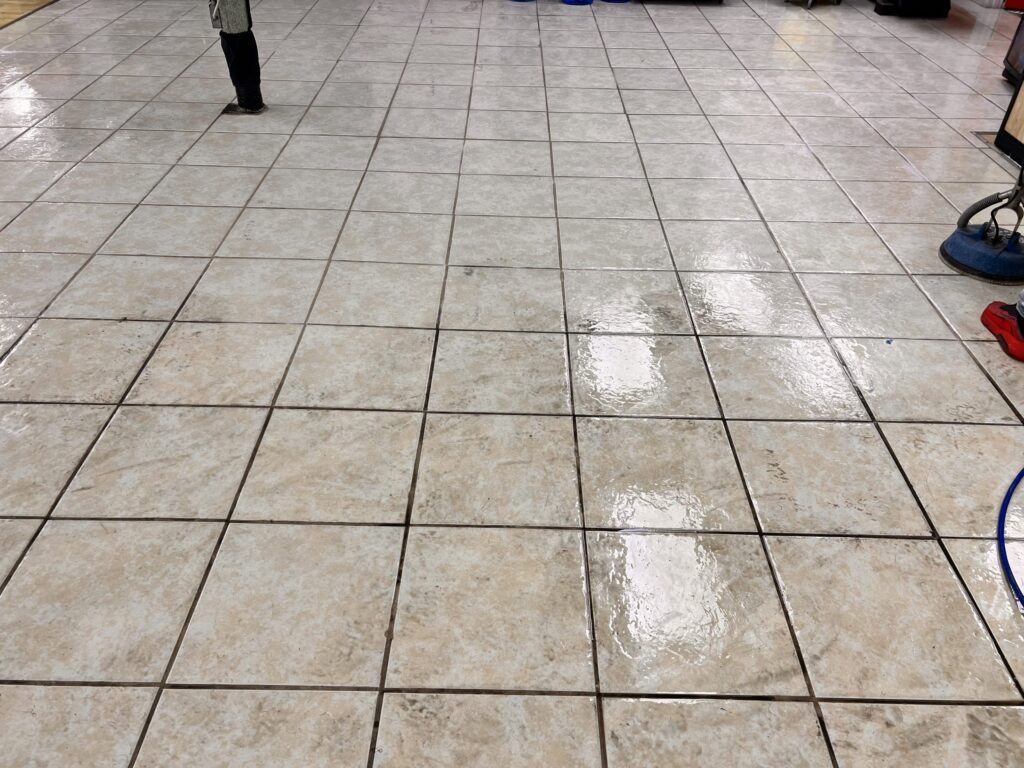
You scrub the shower every weekend, but the grout lines still look gray, dull or spotted. That is a common problem in Florida homes, and learning how to clean grout in shower spaces the right way can save you time, protect your tile and help you spot when a home method is no longer enough.
At Rug Pro, our IICRC-certified team cleans tile and grout for homes and businesses across Pinellas County. This guide covers what builds up on shower grout, how to clean it safely at home, and when to call for a deeper clean.
Key Takeaways
- Grout is porous, so soap scum, hard water minerals and body oils sink into it over time.
- The best way for how to clean grout in shower areas is a gentle cleaner, a soft brush and a clean water rinse.
- Harsh scrub pads and strong acids can wear down grout and dull some tile finishes.
- Drying the shower after use is one of the easiest ways to slow new buildup.
- When grout stays dark after scrubbing, a professional tile and grout cleaning can lift soil from deep in the joints.
Why Does Shower Grout Get So Dirty?
Grout is the cement-based filler between your tiles, and unlike glazed tile, it has tiny open pores that soak up water, soap and skin oils every time you shower.
Several things work together to dirty the lines:
- Soap scum. Bar soap can mix with minerals in the water and leave a sticky film.
- Hard water. Minerals dry on the surface and form white or gray crust.
- Body oils and shampoo. These leave a layer that traps more dirt.
- Moisture. A damp shower that never dries out can grow mildew in the grout.
Florida humidity makes this worse because bathrooms stay damp longer, so buildup forms faster, and over time the grout can look much darker than the day it was installed. If your floor grout has the same problem, our post on why grout turns dark explains the causes in more detail.
How to Clean Grout in Shower Lines Step by Step
You do not need harsh products to clean shower grout, since a slow, gentle approach is usually safer for both the grout and the tile.
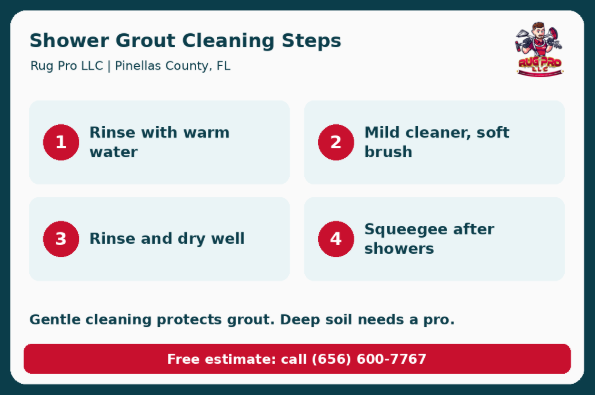
- Rinse the walls and floor. Warm water loosens surface soap and makes the next steps easier.
- Apply a mild cleaner. Use a pH-neutral tile cleaner or a little dish soap mixed with warm water.
- Let it sit. Give the cleaner a few minutes to break down soap film, but do not let it dry on the tile.
- Scrub with a soft brush. A grout brush or an old toothbrush works well when you scrub along the line rather than across the tile.
- Rinse well. Leftover cleaner can leave a film that draws new dirt.
- Dry the area. Wipe the walls with a towel or squeegee when you finish.
Always read the label on any cleaner and test it on a small, hidden spot first, which matters most if you have natural stone, colored grout or older tile.
Grout Cleaning Methods Compared
Not every cleaning method fits every shower, and this table shows how common choices compare when you decide how to clean grout in shower corners and walls.
|
Method |
Best For |
Watch Out For |
|
Warm water and mild soap |
Weekly upkeep |
Will not lift deep stains |
|
pH-neutral tile cleaner |
Light soap scum |
Needs a full rinse |
|
Baking soda paste |
Spot cleaning |
Can leave a haze if not rinsed |
|
Strong acids or bleach |
Rarely a good idea |
Can wear grout and harm stone |
|
Professional hot water extraction |
Deep, built-up soil |
Book with a trained technician |
How to Clean Grout in Shower Areas Without Damage
Some products seem helpful but can cause damage over time, because harsh acids can eat into cement grout and bleach can fade colored grout and may not remove the soil itself. Steel wool and stiff wire brushes can scratch tile glaze and chip the edges of the grout lines.
Never mix cleaning products, because some mixes, such as bleach and ammonia, can create harmful fumes. Open a window or run the fan while you clean, and wear gloves to protect your hands.
If you see mold that keeps coming back or covers a large area, that may point to a moisture problem behind the tile. The EPA has a helpful guide on mold cleanup in your home that explains when to get extra help.
How to Reduce Soap Buildup Between Cleanings
The easiest grout to clean is the grout that never gets very dirty, and a few small habits can slow soap scum buildup and keep your shower looking fresh longer.
- Squeegee after each shower. Removing water stops minerals from drying on the surface.
- Run the fan. Let it run during your shower and for a while after.
- Switch to liquid body wash. Many people find it leaves less film than bar soap.
- Wipe the grout weekly. A quick pass with mild soap prevents heavy layers.
- Fix drips. A leaky shower head keeps the grout wet all day.
These steps take only a minute or two, but over a few months they can make a big difference in how your grout looks.
When to Call for Professional Tile and Grout Cleaning
Sometimes home scrubbing reaches its limit, because soil that has soaked deep into the grout often stays dark no matter how hard you work. You might also notice a dull film on the tile that comes back soon after each cleaning.
Here are signs it may be time for a deeper clean:
- Grout lines stay gray or brown after a full scrub.
- The tile feels slick or sticky even after rinsing.
- Stains have spread from the shower onto the bathroom floor.
- You are getting your home ready to sell or rent.
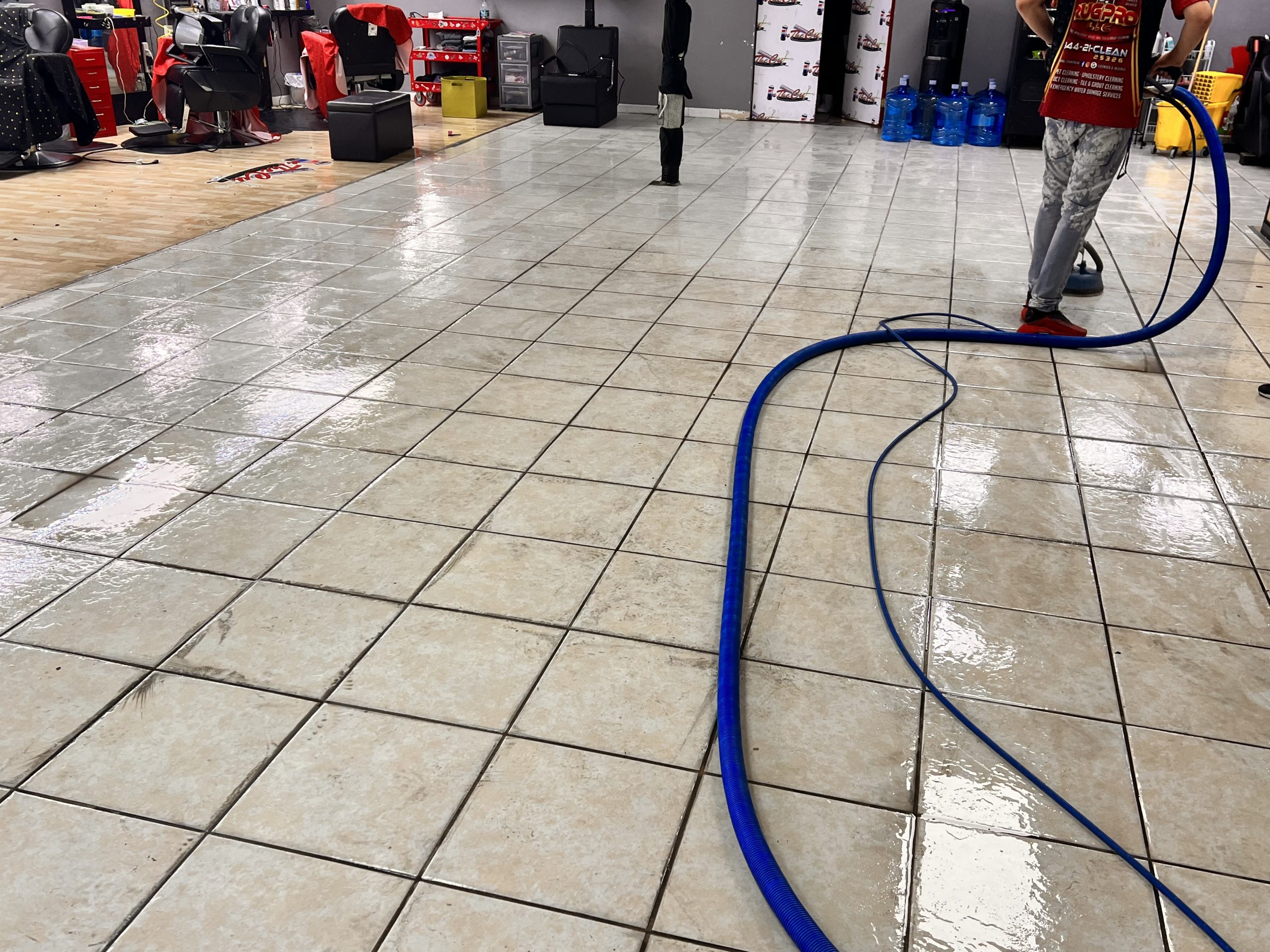
Our team starts each job by looking over the tile and grout, and we check for loose tiles and crumbling grout before any cleaning begins. Next, we pre-treat the dirtiest areas with alkaline cleaners made to break down grease and soap film. Then we use hot water extraction with truck-mounted equipment to pull the loosened soil out. You can learn more about this process on our Clearwater tile and grout cleaning page.
Shower Grout Care After a Deep Clean
Once you know how to clean grout in shower areas, upkeep gets easier. After a deep clean, your grout is at its best, so this is a good time to start the habits listed above. Some homeowners also choose to seal grout after a cleaning to slow new stains, so ask our team what fits your tile and grout type.
Keep your weekly routine simple with mild cleaners, a soft brush and a dry towel, and avoid harsh products that can undo the work. If you want to plan ahead, our guide on what affects the cost of tile and grout cleaning explains how the size and condition of the job shape your quote.
Get Help With Your Shower Grout
Now you know how to clean grout in shower spaces at home and when a deeper clean makes sense. If your grout still looks dark after scrubbing, Rug Pro can help, and we use pet-safe products with IICRC-certified technicians on every job.
Call us at (656) 600-7767 or request service online for a free estimate. You can also see all of our cleaning services, from carpet to tile and grout.
Frequently Asked Questions
Q: What is the best way to clean shower grout?
A: For most showers, a mild pH-neutral cleaner, a soft brush and a full rinse work best. Dry the area when you finish so that new minerals do not settle into the grout.
Q: How often should I clean the grout in my shower?
A: A quick wipe once a week keeps buildup light. A deeper scrub every few weeks helps, and a professional clean can restore grout that has turned dark over time.
Q: Can bleach damage shower grout?
A: Bleach can fade colored grout and may not remove the soil trapped inside. It is also unsafe to mix with other cleaners, so many people get better results with a gentle cleaner and a brush.
Q: Why does my shower grout turn black again so fast?
A: Moisture is usually the cause, because a shower that stays damp can grow mildew quickly, so run the fan, squeegee the walls and fix any drips to slow it down.
Q: Does Rug Pro clean shower grout?
A: Yes. Our tile and grout cleaning covers bathrooms, kitchens, hallways and other tiled areas. Call (656) 600-7767 to ask about your shower.